

ASBESTOS FIBER LOCK
ASBESTOS FIBER LOCK
Asbestos Encapsulation Coating to Stabilise Weathered Asbestos Roofs in South Africa.
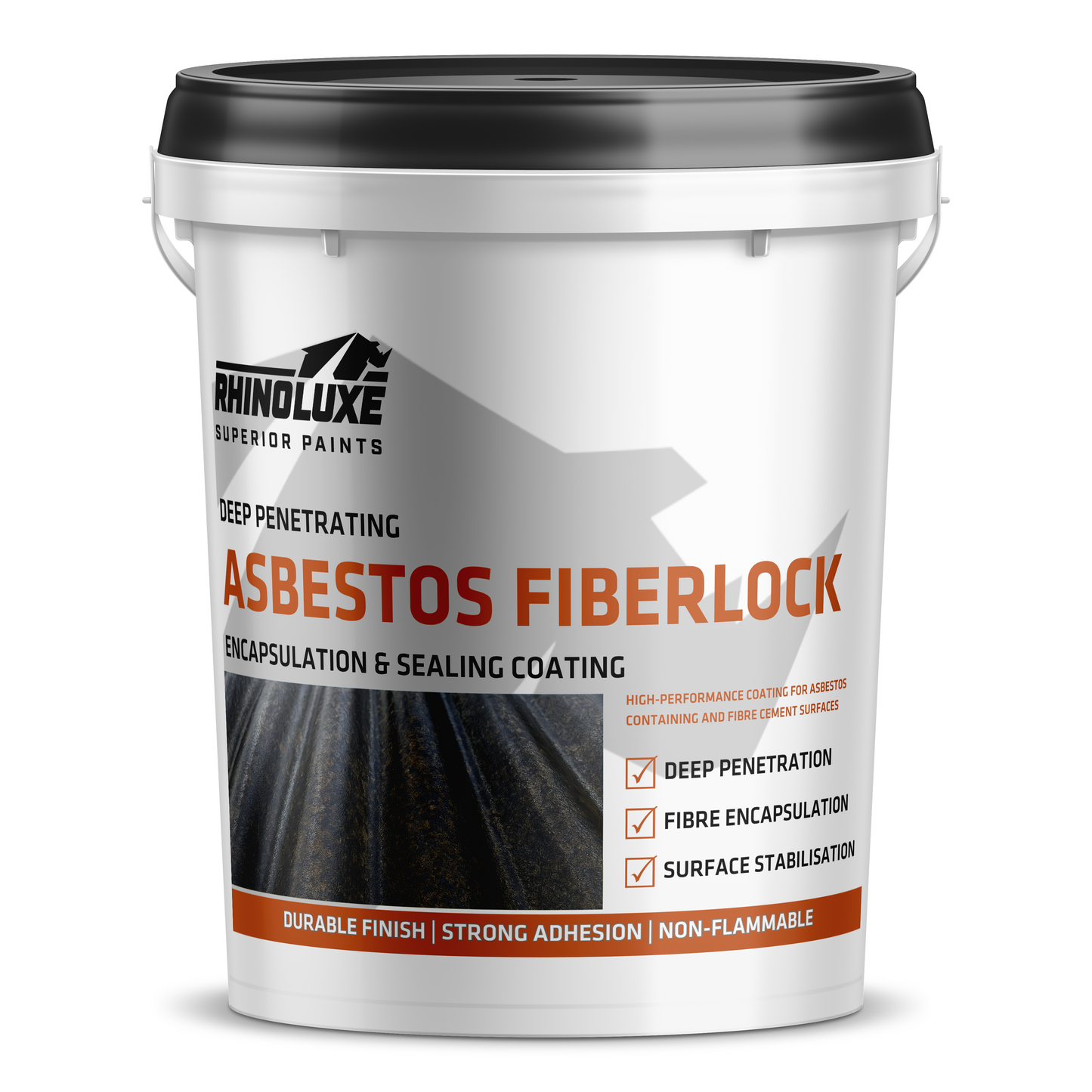
Weathered asbestos roofs shed microscopic fibres every time wind, rain or foot traffic disturbs the degraded surface. Left untreated, those fibres become airborne — creating a health hazard for building occupants and triggering legal obligations under the Asbestos Abatement Regulations 2020. Rhinoluxe Asbestos Fiber Lock asbestos encapsulation coating is a water-based, penetrating product that soaks into the porous asbestos matrix, binds loose fibres in place and seals the substrate against moisture, moss and lichen without the disruption or cost of full removal.
Key Benefits
Penetrating Fibre Lock-Down, Not Just a Surface Film. The low-viscosity formula travels into the pores and micro-cracks of weathered asbestos, creating a three-dimensional bond within the substrate itself. Bridging membranes sit on top of the surface and rely on adhesion alone. Rhinoluxe Asbestos Fiber Lock anchors from within, locking friable fibres at their source.
Integrated Algicidal and Fungicidal Dry-Film Protection. Moss, lichen and algae use root-like structures called rhizoids to physically pry asbestos fibres apart. Asbestos Fiber Lock contains algicidal and fungicidal agents that remain active in the cured film, preventing biological regrowth from undermining the encapsulation layer over time.
Water-Based, Non-Flammable Handling. The product disperses in water and carries no flammable solvent classification. This simplifies storage, transport and on-site handling compared to solvent-based alternatives, particularly on occupied residential and institutional buildings where open-flame restrictions apply.
Universal Bonding Stage for Multiple Topcoat Systems. Rhinoluxe Asbestos Fiber Lock creates the correct adhesion foundation for Shield waterproofing membrane, Fiber Coat fibre-reinforced coating and Premium Roof and Wall acrylic topcoat. Asbestos Fiber Lock supports multiple finishing options depending on the project specification.
Encapsulation at a Fraction of Removal Cost. Full asbestos roof removal in South Africa typically costs R300–R600 per square metre once demolition, disposal, replacement sheeting and compliance documentation are factored in. A Biocide treatment followed by a two-coat Rhinoluxe Fiber Lock system and finished with a protective topcoat delivers effective encapsulation at substantially lower cost, keeping the building operational throughout the process.
Technical Overview
Rhinoluxe Asbestos Fiber Lock is a water-based penetrating sealer. The product is designed specifically for weathered asbestos-cement substrates including corrugated asbestos roofing sheets, flat sheeting, fascia boards and downpipes.
The chemistry provides two advantages over standard acrylic products. The Asbestos Fiber Lock delivers superior alkali resistance, preventing saponification (chemical breakdown of the resin) in the highly alkaline environment of asbestos cement. The acrylic component provides flexibility, allowing the cured film to move with thermal expansion and contraction without cracking.
The product is thixotropic: it thins under spray pressure for maximum penetration into the substrate, then recovers its body once deposited on the surface. This prevents run-off on sloped corrugated roofing and ensures uniform coverage across peaks and valleys. The clear satin finish does not alter the colour of the substrate, making Rhinoluxe Asbestos Fiber Lock suitable as a transparent bonding stage beneath any approved topcoat colour system.
The product is classified as non-hazardous for transport and storage. All asbestos-related work must comply with the Asbestos Abatement Regulations 2020 and be carried out by competent personnel using appropriate personal protective equipment.
Technical Specifications
| Property | Value |
|---|---|
| Product Type | Penetrating Coating |
| Chemical Base | Acrylic Co-Polymer (Water-Based) |
| Appearance | Clear Thixotropic Liquid |
| Finish | Smooth Clear Satin to Medium Sheen |
| Coverage | 7–10 m²/L per coat |
| Surface Dry | 1 Hour |
| Hard Dry | 4 Hours |
| Recoat Time | 4 Hours minimum |
| Specific Gravity | 0.991–1.031 |
| Viscosity | 70–75 KU |
| Non-Volatile Content | 33–35% by volume |
| Flammability | Non-Flammable |
| Hazardous Goods Classification | Not Classified |
| Suitable Substrates | Asbestos Cement Roofing, Flat Sheeting, Fascia Boards, Downpipes |
| Application Method | Airless Spray (preferred), Brush or Roller |
| Clean-Up | Clean Water |
| Packaging | 5 L and 20 L |
Application Method Statement
Step 1 — Sterilise the Surface (Not Compulsary). Spray Rhinoluxe Biocide Steriliser onto the entire asbestos cement surface to kill moss, lichen, algae and fungal spores. Allow a minimum of 24 hours for the biocide to take effect. Heavily colonised roofs may require a second application before proceeding.
Step 2 — Apply Two Coats of Asbestos Fiber Lock. Apply the first coat of Rhinoluxe Asbestos Fiber Lock undiluted using an airless sprayer, brush or roller. Do not thin with water — dilution reduces bonding power and compromises fibre lock-down. Allow a minimum of 4 hours drying time between coats, then apply the second coat. The two-coat system ensures full penetration and saturation of the weathered cement matrix. A third coat might be necessary depending on surface conditions.
Step 3 — Apply Two Coats of Protective Topcoat. Once the second coat of Fiber Lock has reached hard dry (minimum 4 hours), apply two coats of your selected Rhinoluxe topcoat system: Shield waterproofing membrane, Fiber Coat fibre-reinforced coating or Premium Roof and Wall acrylic topcoat. The Fiber Lock coating creates the adhesion foundation that allows the topcoat to bond permanently to the stabilised substrate.
Where access allows, apply the Fiber Lock coating to the underside of asbestos sheeting as well. Encapsulating from both sides provides complete fibre containment and moisture barrier protection.
Technical Guidance
Apply the product undiluted. Adding water reduces the polymer concentration in the film, weakens the fibre bond and produces a powdery finish that fails under tape-pull testing. Stir well before use.
Spray application using an airless sprayer delivers the most consistent coverage on corrugated roofing. The thixotropic formula thins under spray pressure and recovers on contact with the surface, preventing sag and run-off on sloped sheets. Brush and roller application are acceptable for flat sheeting, fascia boards and small repair areas.
Avoid application during cold, wet or excessively humid conditions. Damp substrates trap moisture beneath the primer film, causing blistering when the roof heats up in direct sun. Plan your application window for dry weather with surface temperatures between 10°C and 35°C. Bare asbestos cement dries quickly after rain, but check that no moisture is weeping from the underside before coating.
Rhinoluxe Asbestos Fiber Lock is not suitable for chalky or powdery surfaces where the cement matrix has degraded beyond recovery. Test a small area first: the primer should absorb into the substrate and dry to a clear satin finish. A white, powdery result indicates the surface is too far gone for encapsulation and professional assessment is required.
All asbestos-related work must comply with the Asbestos Abatement Regulations 2020. Personnel must wear FFP2 respirators, disposable coveralls, gloves and safety eyewear. Do not sand, grind or pressure-wash asbestos surfaces — these methods are prohibited because they release fibres into the environment.
Couldn't load pickup availability
Questions & Answers
Have a Question?
-
How long does the encapsulation last?
The acrylic co-polymer bond is engineered for long-term durability when applied correctly at full concentration over a sound substrate. Combined with the correct topcoat system, the encapsulation system supports the ongoing management of asbestos-containing materials over the remaining service life of the roof.
-
What sizes does Rhinoluxe Asbestos Fiber Lock come in?
Rhinoluxe Asbestos Fiber Lock is available in 5 litre and 20 litre containers. The 20 litre option provides better value for roofing projects where two full coats are needed across large surface areas.
-
What PPE is required when working with asbestos?
Personnel must wear FFP2 respirators, disposable coveralls, protective gloves and safety eyewear when working on asbestos-containing materials. Do not sand, grind or pressure-wash the surface. These requirements apply under the Asbestos Abatement Regulations 2020.
-
Can Fiber Lock be applied to the underside of asbestos sheeting?
Where access allows, applying the product to both sides of the sheeting provides complete fibre containment and moisture barrier protection. Encapsulating from both the weather-exposed and interior-facing surfaces is the most thorough approach.
-
What coverage rate does the product achieve?
Rhinoluxe Asbestos Fiber Lock covers approximately 7 to 10 square metres per litre per coat, depending on the porosity and condition of the substrate. Heavily weathered surfaces absorb more product and reduce the coverage rate.
-
How many coats of Fiber Lock are needed?
Two coats are required for effective fibre lock-down and substrate saturation. Apply the first coat, allow a minimum of 4 hours drying time, then apply the second coat.
-
What topcoats can be applied over Asbestos Fiber Lock?
Rhinoluxe Shield waterproofing membrane, Rhinoluxe Fiber Coat fibre-reinforced coating and Rhinoluxe Premium Roof and Wall acrylic topcoat are all compatible. The primer creates the adhesion foundation for whichever topcoat system matches your project specification.
-
Why must the product not be diluted with water?
Dilution reduces the polymer concentration in the applied film, weakening the fibre bond and producing a powdery finish that cannot hold the substrate together. The TDS states clearly: do not dilute. Use the product neat from the container.
-
Does Rhinoluxe Asbestos Fiber Lock contain fungicide?
The product contains algicidal and fungicidal agents that remain active in the cured dry film. This built-in biological protection prevents moss, lichen and algae from re-colonising the treated surface and undermining the encapsulation layer.
-
Is encapsulation better than removing asbestos?
Encapsulation is often the lower-risk and lower-cost option where the asbestos cement is still structurally sound. Full removal disturbs fibres, requires licensed abatement contractors and can cost R300–R600 per square metre. Encapsulation keeps the material in place and locks the fibres down.
-
Can I paint over asbestos roof sheets safely?
Applying a penetrating fibre-locking primer before any topcoat is the correct method for stabilising asbestos cement before painting. This satisfies Type 1 asbestos work requirements under the Asbestos Abatement Regulations 2020 when carried out by competent personnel.
-
How does a penetrating primer differ from a rubber membrane coating?
A penetrating primer travels into the pores and cracks of the asbestos cement to create a three-dimensional bond within the substrate. Rubber membrane coatings sit on the surface and rely on adhesion alone, making them vulnerable to delamination on highly weathered sheets.
-
What is Rhinoluxe Asbestos Fiber Lock?
Rhinoluxe Asbestos Fiber Lock is a water-based, penetrating primer that soaks into weathered asbestos cement to bind loose fibres, seal the substrate against moisture and provide a bonding foundation for protective topcoats.